Best Motion Sensors and Detectors for Home Security

This post may contain affiliate links. Read our policy
A good motion sensor is one of the quietest, most useful devices for home security. It does not stream video or play music, but it is the trigger behind almost everything that feels automatic: a chime when someone walks up the driveway, an alert when someone is at the back door, and an alarm that wakes up the second something moves where it should not. This guide rounds up the best motion sensors and detectors for 2026, and it covers both kinds you can buy: simple standalone alarms and chimes that work entirely on their own with no hub or subscription, and smart, connected sensors that tie into a hub or app and become part of a full alarm system. Motion detection is also the backbone of any layered setup, so it pairs naturally with our broader smart home security guide.
How smart motion sensors work
At its core, a motion sensor watches a zone and tells the rest of your home when something changes in it. When the sensor trips, it sends a signal: it might chime a receiver in another room, fire a phone notification, sound a built-in siren, or trigger an automation like turning on a light. The difference between a basic detector and a "smart" one is what happens after the trip. A standalone unit simply alerts you, while a connected sensor hands that event off to your hub or app so it can become part of a routine. That handoff is what turns a single sensor into the nervous system of an automated home.
PIR versus other detection types
Most home sensors use passive infrared, or PIR. PIR detects the heat that bodies give off and watches for that heat moving across its field of view, which is why it is so good at spotting a person walking into a room and so cheap to run. It is the technology in the SimpliSafe and Honeywell sensors above. Other approaches exist: microwave sensors bounce signals off objects and can see through thin materials, while dual-tech units combine PIR with microwave and only trip when both agree, which cuts down on false alarms. For nearly every indoor home use, a quality PIR sensor is the right and most affordable choice. Outdoor sensors like the TECKNET still rely on PIR but are weather-sealed and tuned for longer range.
Reducing false alerts
False trips are the number one frustration with motion sensors, and almost all of them come down to placement and settings. PIR sensors react to fast temperature changes, so the usual culprits are heating vents, sunlit windows, and pets. Keep the sensor away from registers, radiators, and direct sun, and angle it so its view crosses the room rather than pointing at a doorway full of glare. If you have pets, look for pet-immune sensitivity or mount the unit higher and aim it slightly upward so a small animal stays below the detection zone. On detectors with adjustable sensitivity or a re-trigger delay, dial them in over a few days rather than all at once, and you will land on a setting that catches people but ignores the cat.
Placement and automations
Where you put a sensor decides how useful it is. Corner mounting roughly chest-to-head height gives PIR the widest sweep of a room, and aiming it across the likely path of movement beats pointing it straight at an entrance. Hallways, stair landings, and main entry points give you the most coverage per sensor. Once placement is solid, the automations are where motion sensors earn their keep: closet and pantry lights that switch on hands-free, a hallway nightlight that only glows after dark, an away-mode trip that pushes a phone alert, or a porch light that flips on before you reach the door. Outdoor sensors add an early-warning layer that works hand in hand with your outdoor security cameras, giving you a heads-up before anyone reaches the house.
Frequently asked questions
Do smart motion sensors need a hub? It depends on the type. Standalone detectors like the COTINSE and the HoneTeek chime kit work entirely on their own with no hub or subscription. System sensors like the SimpliSafe and Honeywell units are meant to pair with a base station or security panel, which is what lets them trigger sirens and app alerts.
Will a motion sensor work with pets? Yes, if you choose and place it carefully. Look for pet-immune sensitivity, mount the sensor higher on the wall, and angle it so smaller animals stay beneath the detection zone. Tuning the sensitivity over a few days usually eliminates pet-related false trips.
Can I use a motion sensor outdoors? Only if it is rated for it. Indoor detectors are not weather-sealed, so for a driveway, gate, or yard you want a weatherproof outdoor model like the TECKNET solar sensor, which is built for the longer range and harsher conditions outside.
Best for an Existing Alarm System
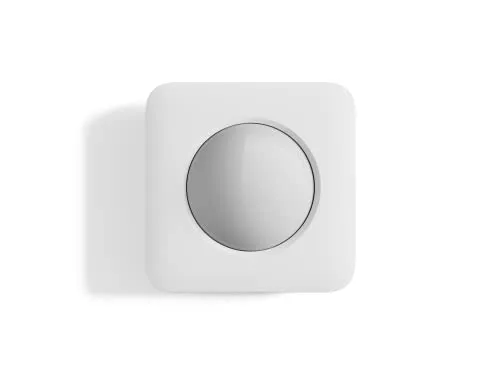
If you already run a SimpliSafe Gen 3 setup, this is the easiest way to add reliable room coverage.
If you already run a SimpliSafe Gen 3 setup, this is the easiest way to add reliable room coverage. It pairs straight to your base station with no wiring and no tools, so you can drop it on a shelf or stick it in a corner and have it watching the room in minutes. Because it ties into your existing system, a trip can arm your siren, fire a phone alert, or kick off any automation you already trust.
Owners love how fast it pairs to the base station and how dependably it catches movement without nuisance trips once it is placed well.
Best Standalone Alert Detector
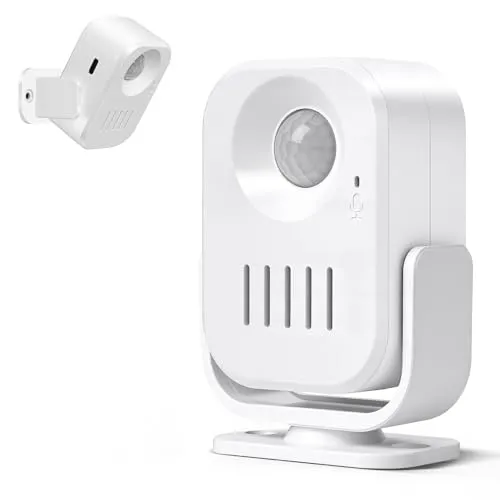
This is a self-contained detector that needs no hub or subscription.
This is a self-contained detector that needs no hub or subscription. Record your own 20-second message and it plays back the moment someone walks past, or switch it to a 120dB siren when you want a real deterrent. It is a favorite for entryways, storefronts, and keeping tabs on a doorway you cannot always see, and it sets up in seconds.
Reviewers like the custom voice recording for greeting visitors and the genuinely loud alarm mode for unwanted activity.
Best Entry Chime Kit
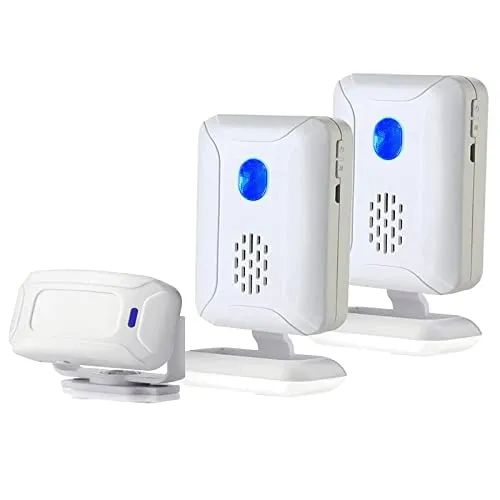
A wireless PIR detector paired with two plug-in chime receivers, so the alert reaches you wherever you are in the house.
A wireless PIR detector paired with two plug-in chime receivers, so the alert reaches you wherever you are in the house. Aim the sensor at a hallway, mailbox, or shop door and you will get a discreet buzz the instant someone arrives. It is a popular caregiver and small-business tool because it is easy to mount, easy to move, and needs no apps or wiring.
Buyers appreciate the two-receiver design that carries the alert across the home and the simple peel-and-stick mounting.
Best Pro Grade PIR Sensor
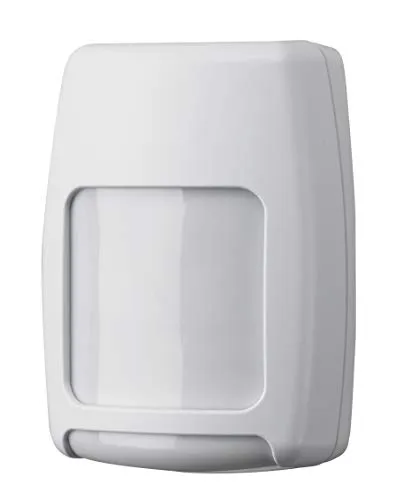
Built for serious whole-home alarm coverage, this wireless passive-infrared sensor is the kind of detector professional installers reach for.
Built for serious whole-home alarm coverage, this wireless passive-infrared sensor is the kind of detector professional installers reach for. It is designed for wide, dependable room coverage and integrates with compatible Honeywell security panels, making it a strong choice if you are growing a system rather than just adding a single room alert.
Installers and homeowners praise its dependable detection and how cleanly it slots into a larger Honeywell-based security system.
Best Outdoor and Driveway Sensor
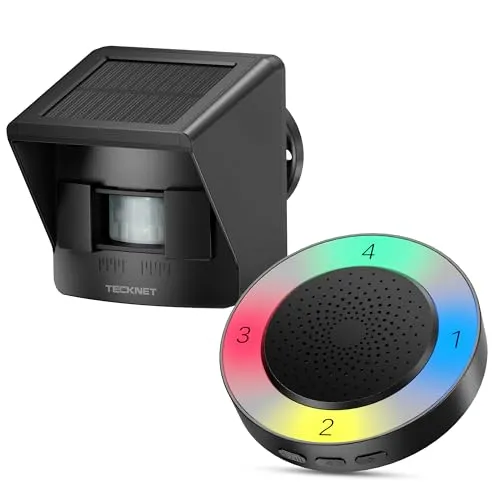
A weatherproof, solar-charged motion sensor that watches your driveway, gate, or yard and chimes a receiver inside the house.
A weatherproof, solar-charged motion sensor that watches your driveway, gate, or yard and chimes a receiver inside the house. The long wireless range and multiple zones let you cover a large property, and the solar panel means you are not climbing out to swap batteries. It is the pick when you want a heads-up before a visitor or vehicle reaches the door.
Owners highlight the long range, the hands-off solar charging, and the choice of melodies and volumes for outdoor coverage.
Review of Our Favorite 3
About the Author
Ilana Nevin
Ilana Nevin is a content creator and marketing professional who is passionate about new technology, home automation and the smart home revolution. She has been blogging about these topics for over five years and is excited to see how the industry continues to evolve.