Wireless vs Wired Security Cameras: Which Should You Buy?

This post may contain affiliate links. Read our policy
Choosing security cameras almost always comes down to one fork in the road: go wireless and prioritize easy setup, or go wired and prioritize rock-solid reliability. Neither answer is wrong — the best choice depends on your home, your patience for installation, and how much you care about never recharging a battery. This guide breaks down the real trade-offs so you can buy with confidence. For the bigger picture of how cameras fit alongside doorbells, locks, and sensors, start with our smart home security guide, and for hands-on outdoor picks see our notes on outdoor security cameras.
The pros and cons of wireless cameras
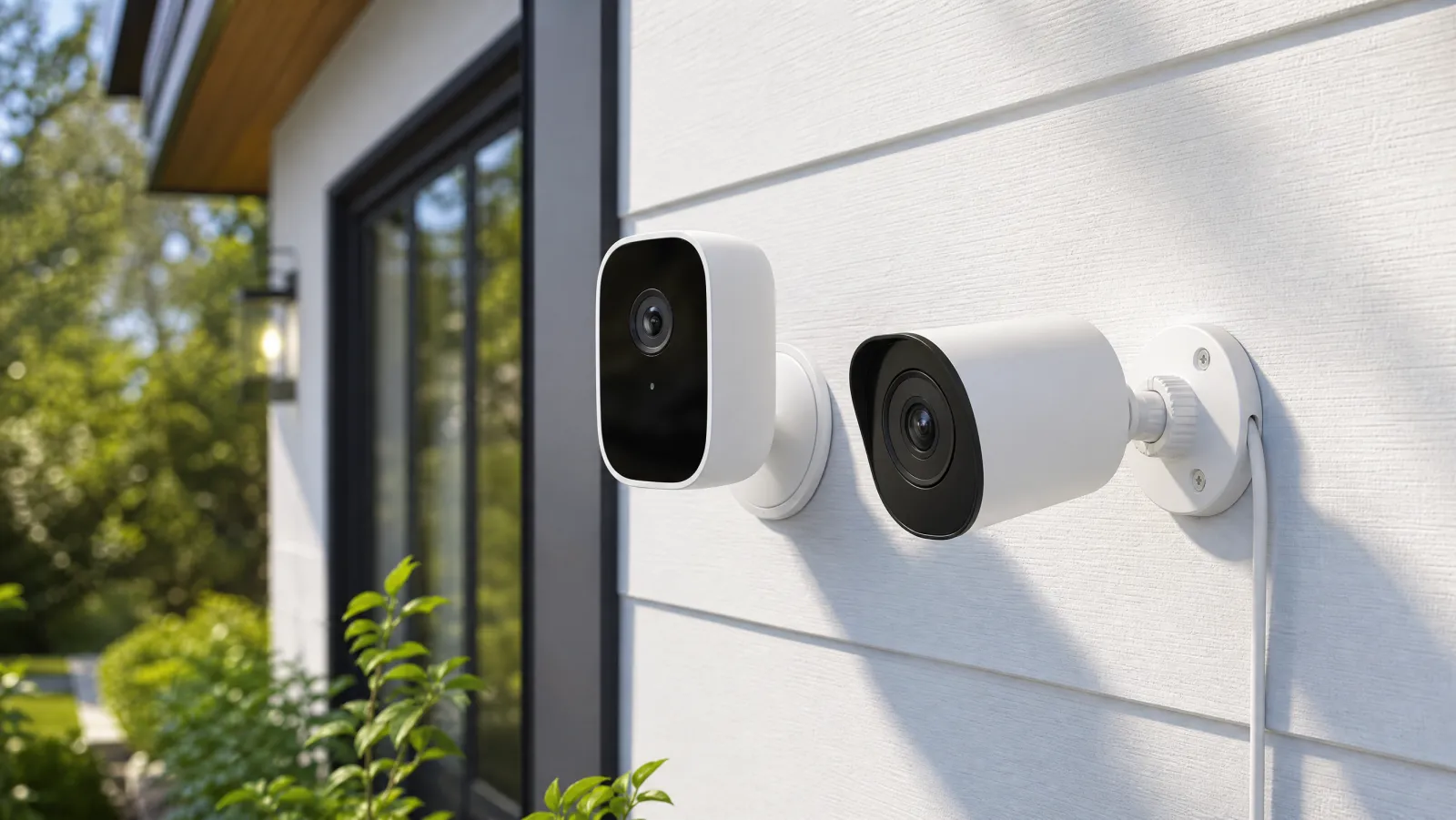
Wireless cameras are the reason home security went mainstream. Most are battery-powered and connect over Wi-Fi (or, in a few cases, cellular), which means you can mount one in minutes with nothing more than a screwdriver — or sometimes just an adhesive base. There is no drilling through walls, no cable to fish through your attic, and no electrician to call.
That freedom is the whole appeal. You can place a wireless camera exactly where you need it, move it later, and even take it with you if you rent. Cellular models go a step further and work where there is no Wi-Fi at all, which is perfect for a detached garage or a remote gate.
The trade-offs are real, though. Batteries need recharging every few weeks to a few months depending on how busy the camera is, and a busy spot drains them faster. Wireless video also depends on the strength of your Wi-Fi signal, so cameras far from the router can drop frames or briefly disconnect. For most homes these are manageable annoyances — but they are annoyances.
The pros and cons of wired and PoE cameras
Wired cameras flip the priorities. Instead of easy setup, you get reliability you can forget about. The standout option here is PoE (Power over Ethernet), where a single Ethernet cable carries both power and video to each camera. Once it is mounted, there is no battery to recharge and no Wi-Fi signal to lose — the camera simply runs, around the clock, for years.
That dependability is why PoE systems dominate among people covering larger properties or anyone who wants continuous, always-on recording. A full system with its own recorder can capture days of footage without missing a moment, and because everything is local, there are no monthly cloud fees.
The catch is installation. Running Ethernet cable through walls and ceilings is more work, and a multi-camera system may be a weekend project or a job for a pro. Wired cameras also stay where you put them — you do not get the move-it-anywhere flexibility of a battery model, so relocating one later means re-running cable.
There are a couple of other trade-offs worth weighing. A PoE system typically costs more up front once you account for cabling and an NVR or recorder. And because the cameras draw their power down the wire, they go dark in a power outage unless the system has a battery backup (a UPS), whereas battery cameras simply keep running. You are trading convenience and resilience up front for set-and-forget reliability the rest of the time.
Power and storage: the deciding details
Two practical factors often settle the debate. The first is power. Battery cameras install anywhere but ask for recharges; plug-in and PoE cameras never need attention but require an outlet or a cable run. If a ladder-climb every couple of months sounds tedious, that alone may push you toward wired.
The second is storage. Wireless cameras frequently lean on cloud storage, which is convenient and off-site but often comes with a subscription. Wired systems usually record locally to a card or a built-in drive, keeping footage private and fee-free. Many cameras on both sides now offer a mix, so check whether the model you like supports the storage style you want before you buy.
Which should you choose?
If you want cameras up today, rent your home, or need coverage where Wi-Fi reaches but cables cannot, go wireless — start with an easy battery pair, or a cellular-solar model for true off-grid spots. If you own your home, want to set it and forget it, or are covering a larger property with continuous recording, go wired — a PoE camera kit hits the sweet spot, while a full PoE system with a recorder is the most thorough choice.
And you do not have to pick just one. Many of the best setups are hybrids: PoE cameras at the fixed points that matter most, plus a wireless camera or two for the spots that are awkward to wire. Buy for the reliability you need at each location, not for one label across the whole house.
Frequently asked questions
Are wireless cameras less secure than wired ones? Not inherently. A wired connection cannot be jammed the way Wi-Fi theoretically can, which matters to some buyers, but reputable wireless cameras use strong encryption and are plenty secure for the average home. Reliability, not hacking, is the more common reason people choose wired.
Do wireless cameras really work without any wires? Battery and solar-cellular models run with no wires at all. Many "wireless" cameras, however, are wireless for data but still need a power cable plugged into an outlet — so always check whether a model is battery-powered or just plug-in before you buy.
Can I mix wireless and wired cameras in one home? Absolutely, and many people do. Use PoE cameras at your main entry points for set-and-forget reliability, then add battery cameras wherever running cable would be a hassle. They will not share one app unless they are the same brand, but they can absolutely protect the same home together.
Best Easy Wireless Pick
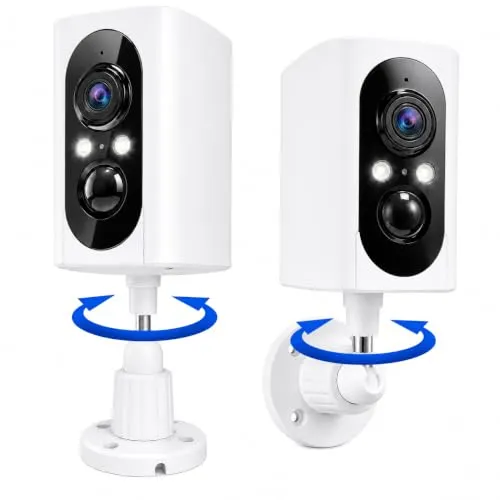
A battery-powered, fully wireless pair you can stick almost anywhere in minutes with no drilling and no cables to run.
A battery-powered, fully wireless pair you can stick almost anywhere in minutes with no drilling and no cables to run. Pan coverage lets each camera sweep a wide area, color night vision keeps footage useful after dark, and motion alerts land straight on your phone. Footage saves to a card or the cloud, so you can skip a subscription if you prefer. If you want cameras up the same afternoon you unbox them, this is the gentlest place to start.
Buyers love how fast these go up and how flexible the placement is without any wiring to deal with.
Best No WiFi Wireless Option
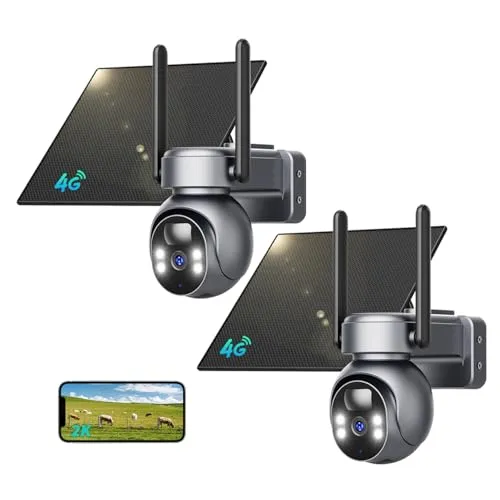
Built for spots where Wi-Fi simply does not reach — a detached garage, a barn, a remote gate — these run on a cellular connection and recharge from the sun, so there are no wires at all.
Built for spots where Wi-Fi simply does not reach — a detached garage, a barn, a remote gate — these run on a cellular connection and recharge from the sun, so there are no wires at all. Color night vision, motion alerts, and two-way talk let you watch and respond from anywhere. It is the closest thing to a truly install-anywhere camera, with no router and no outlet in sight required to keep it running. Just note the cellular link needs a paid SIM/data plan, which is a recurring cost to budget for.
Owners rely on these for off-grid and far-flung locations where every other camera would lose signal.
Best Plug In Wired Combo
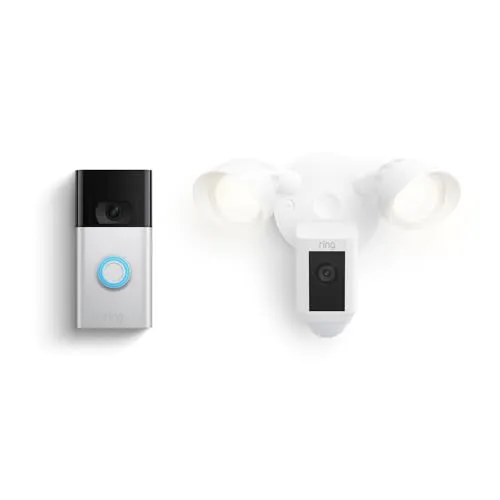
A wired-power floodlight camera bundled with a video doorbell, so you cover your driveway and your front door in one purchase.
A wired-power floodlight camera bundled with a video doorbell, so you cover your driveway and your front door in one purchase. Because it draws constant power, you never recharge a battery, and the bright floodlight doubles as a deterrent the moment motion is detected. Two-way talk and phone alerts round it out. A great middle ground if you want wired reliability without running data cable across the whole house.
Reviewers point to the constant power and bright floodlight as the reason it never misses an event.
Best PoE Camera Kit
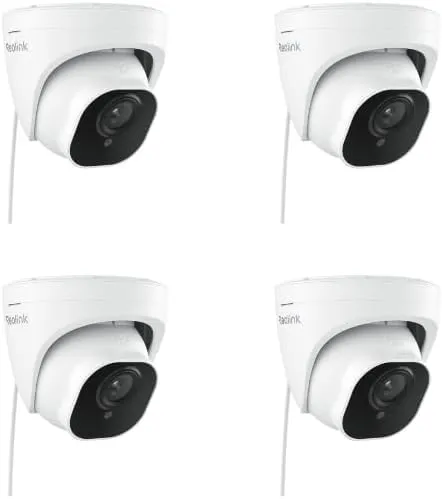
Four Power-over-Ethernet cameras that send video and pull power down a single cable each, so once they are mounted you can essentially forget about them.
Four Power-over-Ethernet cameras that send video and pull power down a single cable each, so once they are mounted you can essentially forget about them. Smart person, vehicle, and pet detection cut down on false alerts, and long-range IR night vision keeps the picture clear in the dark. Local recording means no monthly fees. This is the wired sweet spot for anyone who wants rock-solid uptime without buying a full NVR system.
Buyers praise the set-and-forget reliability and the freedom from subscription fees with local storage.
Best Full Wired System
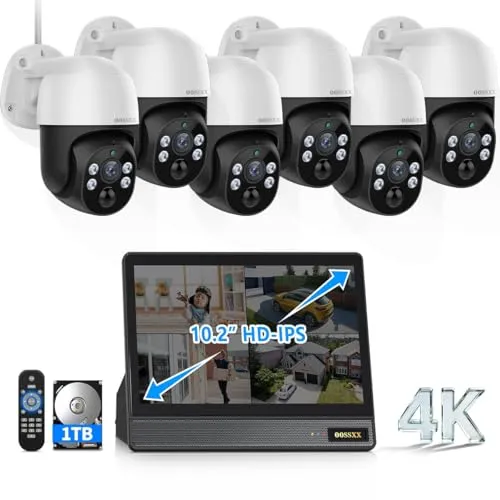
A complete six-camera wired system with its own recorder, monitor, and built-in storage, so everything you record stays in your home with no monthly fee.
A complete six-camera wired system with its own recorder, monitor, and built-in storage, so everything you record stays in your home with no monthly fee. The pan-tilt cameras can track motion across a wide area, and the included drive holds days of continuous footage. If you are covering a larger property and want professional-grade, always-on recording, a full PoE system like this is the most thorough route you can take.
Owners highlight the all-in-one coverage and the comfort of continuous local recording with no recurring cost.
Review of Our Favorite 3
About the Author
Ilana Nevin
Ilana Nevin is a content creator and marketing professional who is passionate about new technology, home automation and the smart home revolution. She has been blogging about these topics for over five years and is excited to see how the industry continues to evolve.