Google Nest Learning Thermostat Review (2026): Still Worth It?

This post may contain affiliate links. Read our policy
The Google Nest Learning Thermostat is the product that made "smart thermostat" a household phrase, and years later it's still the one most people picture. But with cheaper Nest models and a feature-packed ecobee competing hard, is the premium Learning Thermostat still worth it in 2026? We've put it through its paces — here's the honest verdict. For how it fits among all the alternatives, see our complete smart thermostat buyer's guide.
This article contains affiliate links. We may earn a commission if you make a purchase through our links, at no extra cost to you.
Verdict up front
Yes — with one caveat. The Nest Learning Thermostat is the best choice if you value a thermostat that programs itself and looks fantastic doing it. The caveat: it doesn't include a room sensor and ties most tightly to the Google ecosystem, so feature-maximizers and Apple users may prefer ecobee. At around $242 it's a premium buy, but for the right person it's the most satisfying thermostat on the market.
Best for: people who want set-and-forget comfort, Google Home households, and anyone who cares how their thermostat looks. Skip it if: you want a built-in room sensor (get ecobee) or you're on a tight budget (see budget picks).
What makes it different: it learns
The headline feature is right there in the name. For the first week or two you just use it like a normal thermostat — nudge it up in the morning, down at night — and it watches. Then it builds a schedule from your behavior automatically, no app programming required. For the large number of people who buy a programmable thermostat and never actually program it, this is genuinely transformative: you get the savings of a tailored schedule without doing any of the work.
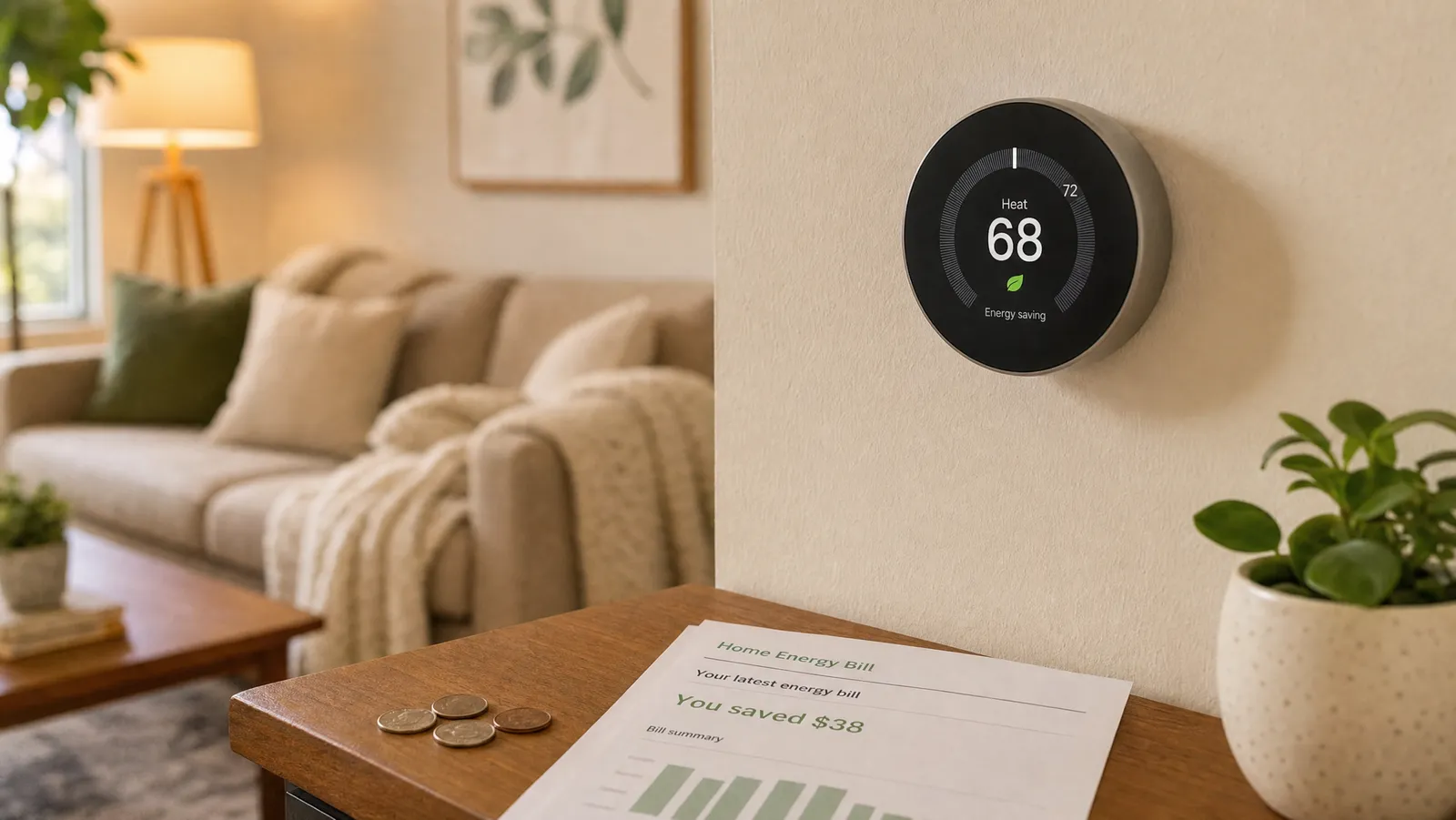
It also adds Home/Away Assist, easing back to an Eco temperature when everyone leaves, and the Nest Leaf icon that nudges you toward energy-saving settings. Combined, these are the features that turn the ENERGY STAR baseline of roughly 8% / $50 a year into real, hands-off savings — more on that in do smart thermostats save money?.
Design and everyday use
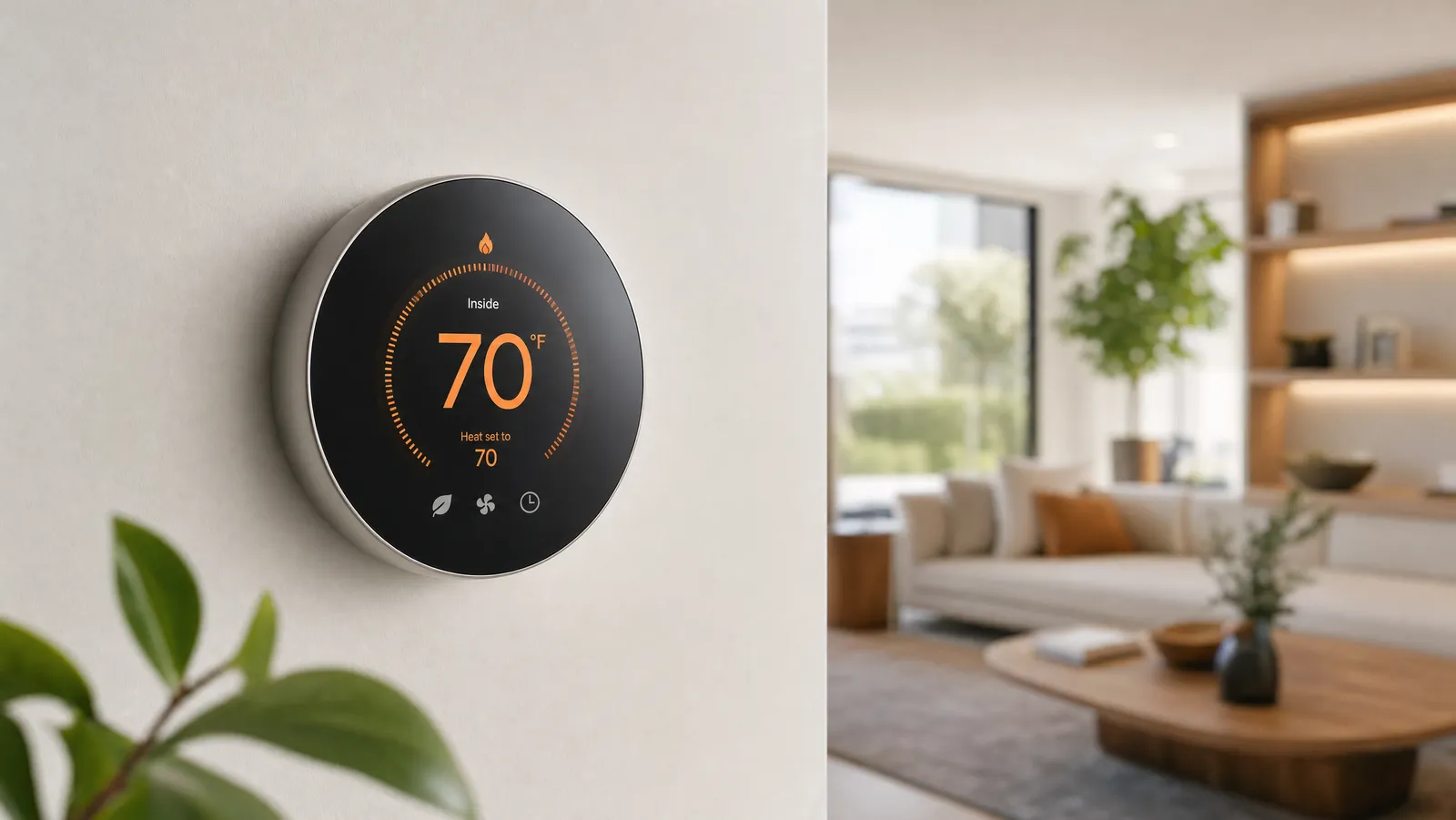
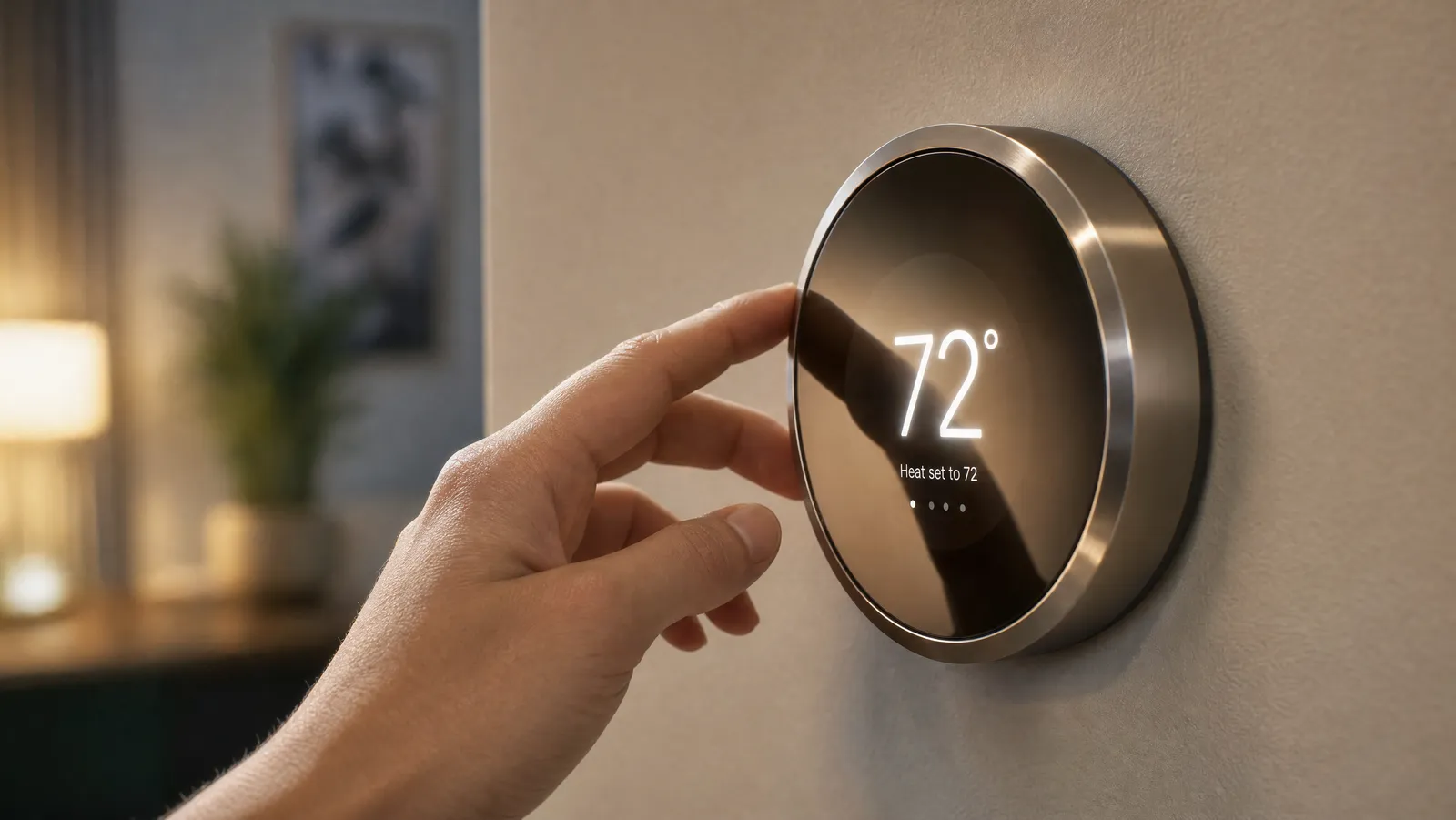
This is where the Learning Thermostat earns its premium. The polished metal ring and crisp circular display look like decor rather than a gadget, and Farsight lights up the temperature, weather, or time as you walk into the room. You adjust it by turning the outer ring — a tactile, satisfying interaction that the cheaper Nest Thermostat's touch strip doesn't quite match. Day to day, it's the nicest thermostat to live with that we've tested.
Features that matter
- HVAC monitoring keeps an eye on your heating and cooling and alerts you if something looks wrong — a genuinely useful early-warning system.
- Energy History shows how much you used and why, right on your phone.
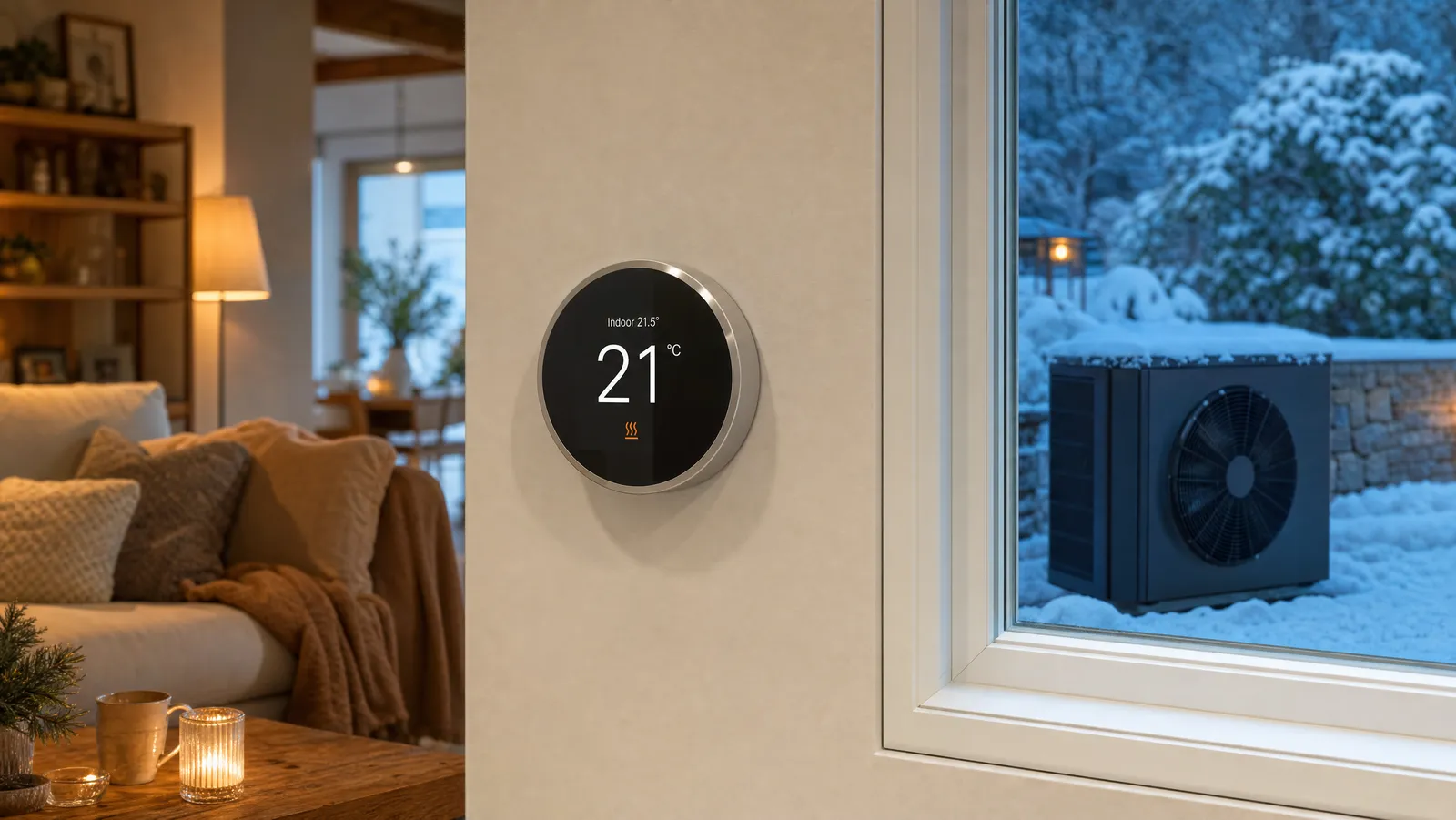
- Broad compatibility — Google rates it for about 95% of home systems, including heat pumps with auxiliary heat (see our heat pump guide).
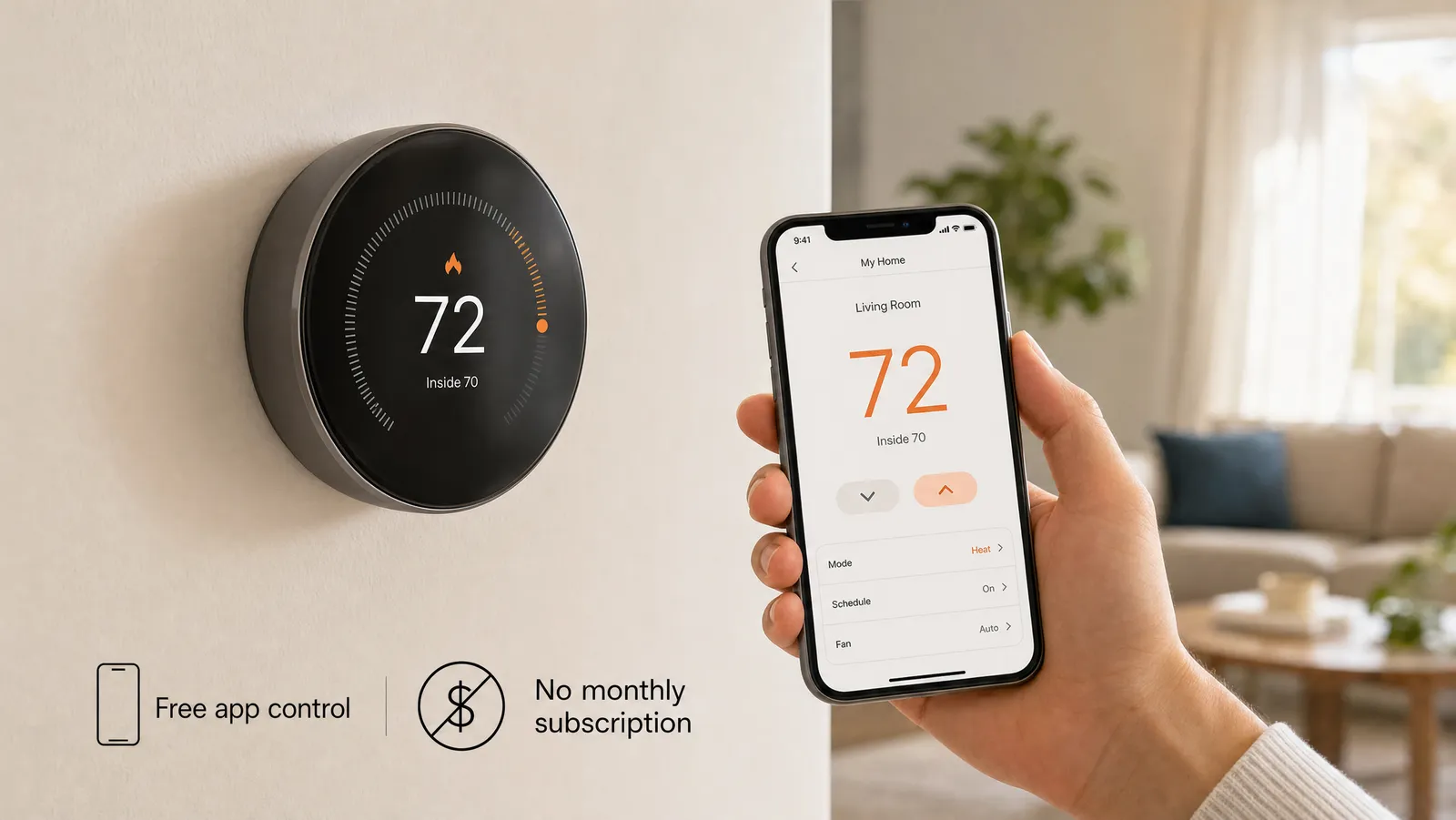
- Remote control from anywhere via the Google Home app.
Where it falls short
No product is perfect, and two gaps stand out:
- No room sensor in the box. The thermostat only senses its own location, so homes with hot and cold spots should budget for the Nest Temperature Sensor (around $40). ecobee includes one for free, which is a real advantage — we break that down in Nest vs. ecobee.
- Ecosystem lock-in. It's superb in a Google home but doesn't support Apple HomeKit, and there's no built-in voice assistant like ecobee's Alexa.
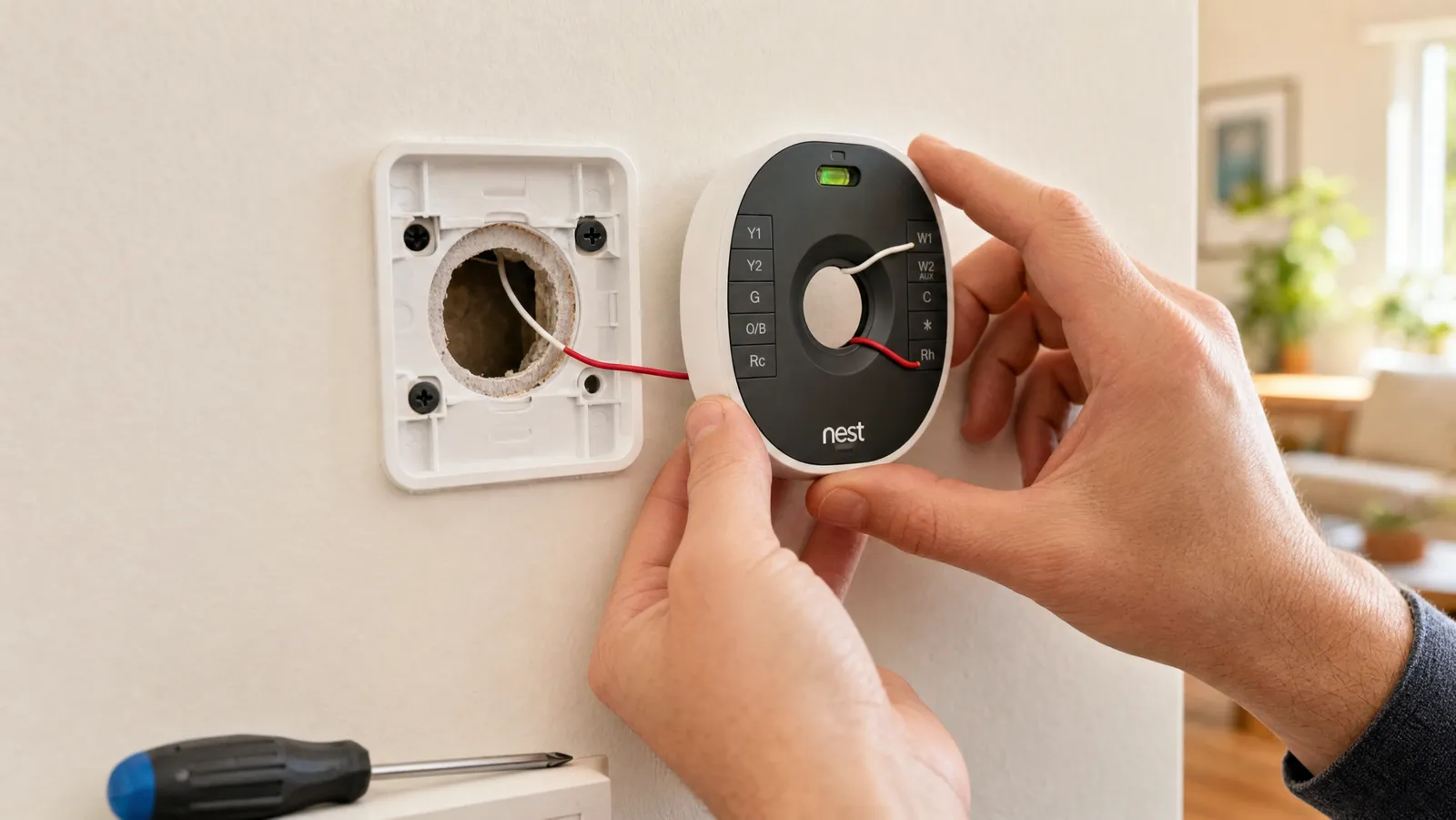
The other consideration is the C-wire: like most Nest installs, it's happiest with a common wire. If your home lacks one, read our no-C-wire guide before buying, or consider a model that includes an adapter.
Installation
Installation is genuinely DIY, typically 30 minutes or less, with everything you need in the box and a step-by-step app walkthrough. Turn off power at the breaker, photograph your old wiring, and follow the prompts. The one variable, as above, is whether you have a C-wire — sort that out first using our installation guide.
Nest Learning vs. the alternatives
It helps to see where the Learning Thermostat sits, both in its own lineup and against ecobee:
- vs. the standard Nest Thermostat (~$111): the cheaper model drops self-learning and the metal build, but keeps app control, away detection, and energy history. If you're happy setting a schedule once, you can save real money — see our budget roundup.
- vs. the ecobee SmartThermostat (~$229): ecobee includes a room sensor, has built-in Alexa, and supports Apple HomeKit; the Nest wins on design and hands-off learning. Our Nest vs. ecobee comparison covers this in full.
In short, the Learning Thermostat earns its premium specifically for self-programming and design. If you don't value those two things, a cheaper option captures most of the benefit.
Is it worth it in 2026?
For the right buyer, absolutely. If you want a thermostat that programs itself, looks beautiful, and monitors your HVAC — and you're in the Google ecosystem — nothing else delivers that combination as gracefully. If you'd rather have a free room sensor, built-in Alexa, and HomeKit support, the ecobee is the smarter spend. And if you simply want Nest quality for less, the standard Nest Thermostat covers the basics beautifully.
Frequently asked questions
Is the Nest Learning Thermostat still worth buying? Yes, if you value self-programming and premium design and you use Google Home. Feature-maximizers and Apple users may prefer ecobee; budget shoppers may prefer the standard Nest Thermostat.
Does it work without a C-wire? Sometimes, but like most Nest models it's most reliable with one. Check compatibility first and see our no-C-wire guide if you don't have a common wire.
Does it work with Alexa and Apple HomeKit? It works with Alexa and Google Assistant, but not Apple HomeKit. If you're an Apple household, choose ecobee.
Do I need the Nest Temperature Sensor? Only if your home has rooms that run hotter or colder than where the thermostat is mounted. If so, one or two sensors make a big comfort difference — details in our room sensors guide.
The bottom line
The Nest Learning Thermostat remains the most effortless, best-looking smart thermostat you can buy, and it's still an easy recommendation for Google-home users who want it to just handle itself. Factor in a room sensor if your home needs one, confirm your wiring, and you'll have a thermostat you barely think about — which is exactly the point. To weigh it against every alternative, head back to our complete smart thermostat buyer's guide.
The Nest Learning Thermostat

The Nest Learning Thermostat is the model that defined the category, and it remains the most effortless smart thermostat you can buy.
The Nest Learning Thermostat is the model that defined the category, and it remains the most effortless smart thermostat you can buy. It watches how you adjust the temperature for a week or two, then builds a schedule automatically — after which you can largely forget it exists. The polished metal ring, high-resolution display, and walk-up Farsight feature still look the part on any wall, and built-in HVAC monitoring flags furnace or AC issues early. It's compatible with around 95% of heating and cooling systems.
The most hands-off thermostat made: it programs itself, looks beautiful, and quietly keeps an eye on your HVAC system.
Best Add On

The Nest Learning Thermostat only reads the temperature where it's mounted, which is the one real gap versus ecobee.
The Nest Learning Thermostat only reads the temperature where it's mounted, which is the one real gap versus ecobee. The Nest Temperature Sensor closes it: drop it in a bedroom, nursery, or office and tell the thermostat to prioritize that room at certain times. The battery lasts up to three years, and you can run up to six sensors. If your home has hot and cold spots, budget for at least one of these alongside the thermostat.
An inexpensive fix for hot and cold rooms — three-year battery life and simple setup in the Google Home app.
Review of What We Liked
About the Author
Ilana Nevin
Ilana Nevin is a content creator and marketing professional who is passionate about new technology, home automation and the smart home revolution. She has been blogging about these topics for over five years and is excited to see how the industry continues to evolve.