Smart Thermostat Room Sensors & Multi-Zone Heating Explained (2026)

This post may contain affiliate links. Read our policy
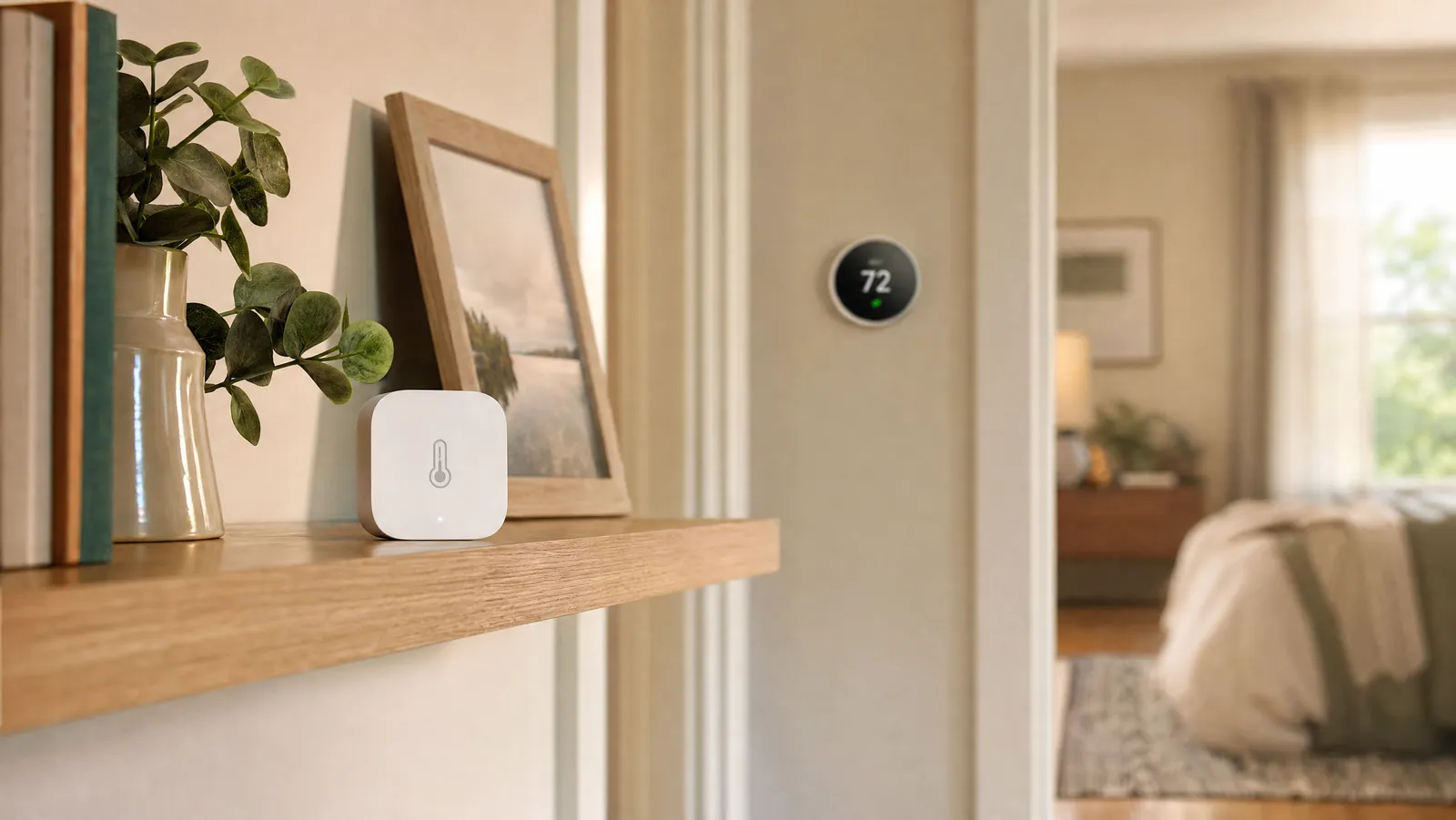
A thermostat has one quiet flaw: it only measures the temperature in the spot where it's mounted — usually a hallway no one spends time in. So your bedroom runs cold while the hallway reads "perfect." Room sensors fix exactly this, and they're the single biggest comfort upgrade most homes can make. Here's how they (and multi-zone setups) work. For the thermostats themselves, see our complete smart thermostat buyer's guide.
This article contains affiliate links. We may earn a commission if you make a purchase through our links, at no extra cost to you.
Why room sensors matter
Picture a two-story home. The thermostat is downstairs in the hall; the bedrooms are upstairs. The thermostat hits its target and shuts off — but the bedrooms are still three degrees too warm or cold, because heat behaves differently around the house. A remote room sensor placed in the bedroom lets the thermostat read that room and adjust accordingly, either by prioritizing it or by averaging across several rooms.
This is the gap between a good thermostat experience and a great one. If your home has hot and cold spots, sensors matter more than almost any other feature.
How room sensors work
- Placement. Drop a small wireless sensor in any room — a shelf, a wall, a nightstand.
- Prioritize or average. Tell the thermostat to focus on one room at certain times (the bedroom at night), or to average several rooms for a balanced whole-home feel.
- Occupancy (ecobee). ecobee's SmartSensor also detects motion, so the system can automatically prioritize whichever rooms are actually in use.
- Battery life. These are wireless and long-lived — Google's Nest sensor lasts up to three years.
ecobee vs. Nest for room sensing
This is where ecobee pulls ahead of Nest:
- ecobee includes a SmartSensor in the box, and its sensors detect occupancy as well as temperature. You can add more (ecobee supports several).
- Nest sells its Temperature Sensor separately (~$40 each, up to six), and it reads temperature only — no occupancy.
If room sensing is a priority, ecobee gives you more out of the box. Our full Nest vs. ecobee comparison covers the rest of the differences, and the Nest Learning review explains where its sensor fits.
Room sensors vs. true multi-zone
It's worth distinguishing two different things:
- Room sensors help one thermostat make smarter decisions for a single HVAC zone — great for evening out one system.
- True multi-zone systems use motorized dampers and a separate thermostat per zone to heat or cool areas independently. That's a bigger HVAC project.
For most homes with uneven temperatures on one system, room sensors are the affordable, effective answer — you don't need full zoning. If you genuinely have (or want) independent zones, each needs its own thermostat; see our compatibility guide.
Who should add room sensors?
- Homes with a cold bedroom or hot office far from the thermostat.
- Multi-story houses where upstairs and downstairs differ.
- Anyone who wants a specific room (a nursery) kept exactly right at certain times.
If that's you, budget for at least one sensor alongside the thermostat — or buy ecobee, which includes one.
Frequently asked questions
What do smart thermostat room sensors do? They measure temperature (and sometimes occupancy) in other rooms, so the thermostat can prioritize or average those rooms instead of only sensing its own location.
Does ecobee or Nest have better room sensors? ecobee — it includes one in the box and detects occupancy. Nest's sensor is sold separately and reads temperature only.
How many room sensors can I use? Several with ecobee; up to six with Nest. Place them in the rooms that matter most.
Are room sensors the same as multi-zone heating? No. Sensors make one thermostat smarter for one zone. True multi-zone uses dampers and a thermostat per zone — a larger project.
The bottom line
Room sensors quietly solve the most common comfort complaint — that one room that's never right — and they're far cheaper than re-zoning your HVAC. ecobee is the standout because it includes an occupancy-aware sensor, while Nest owners can add the Temperature Sensor for around $40. To choose the thermostat behind it all, see our complete smart thermostat buyer's guide.
Best for Room Sensing

ecobee is the room-sensing leader because it includes a SmartSensor in the box and reads both temperature and occupancy — so the system can prioritize rooms that are actually occupied.
ecobee is the room-sensing leader because it includes a SmartSensor in the box and reads both temperature and occupancy — so the system can prioritize rooms that are actually occupied. Add more sensors as needed to even out the whole house. Combined with built-in Alexa and HomeKit support, it's the most complete answer to hot and cold rooms.
Comes with an occupancy-aware room sensor out of the box and scales to cover the whole home — the room-sensing champion.
Best Add On Sensor

If you have (or want) a Nest Learning Thermostat, the Nest Temperature Sensor is the way to fix hot and cold spots.
If you have (or want) a Nest Learning Thermostat, the Nest Temperature Sensor is the way to fix hot and cold spots. Place it in a bedroom, nursery, or office and tell the thermostat to prioritize that room at certain times. The battery lasts up to three years and you can run up to six sensors around the house. It's the simple, inexpensive comfort upgrade for Nest owners.
Three-year battery, simple setup, and up to six rooms covered — the easy comfort fix for Nest households.
Review of What We Liked
About the Author
Ilana Nevin
Ilana Nevin is a content creator and marketing professional who is passionate about new technology, home automation and the smart home revolution. She has been blogging about these topics for over five years and is excited to see how the industry continues to evolve.