Will a Smart Thermostat Work With My HVAC System? (2026 Guide)

This post may contain affiliate links. Read our policy
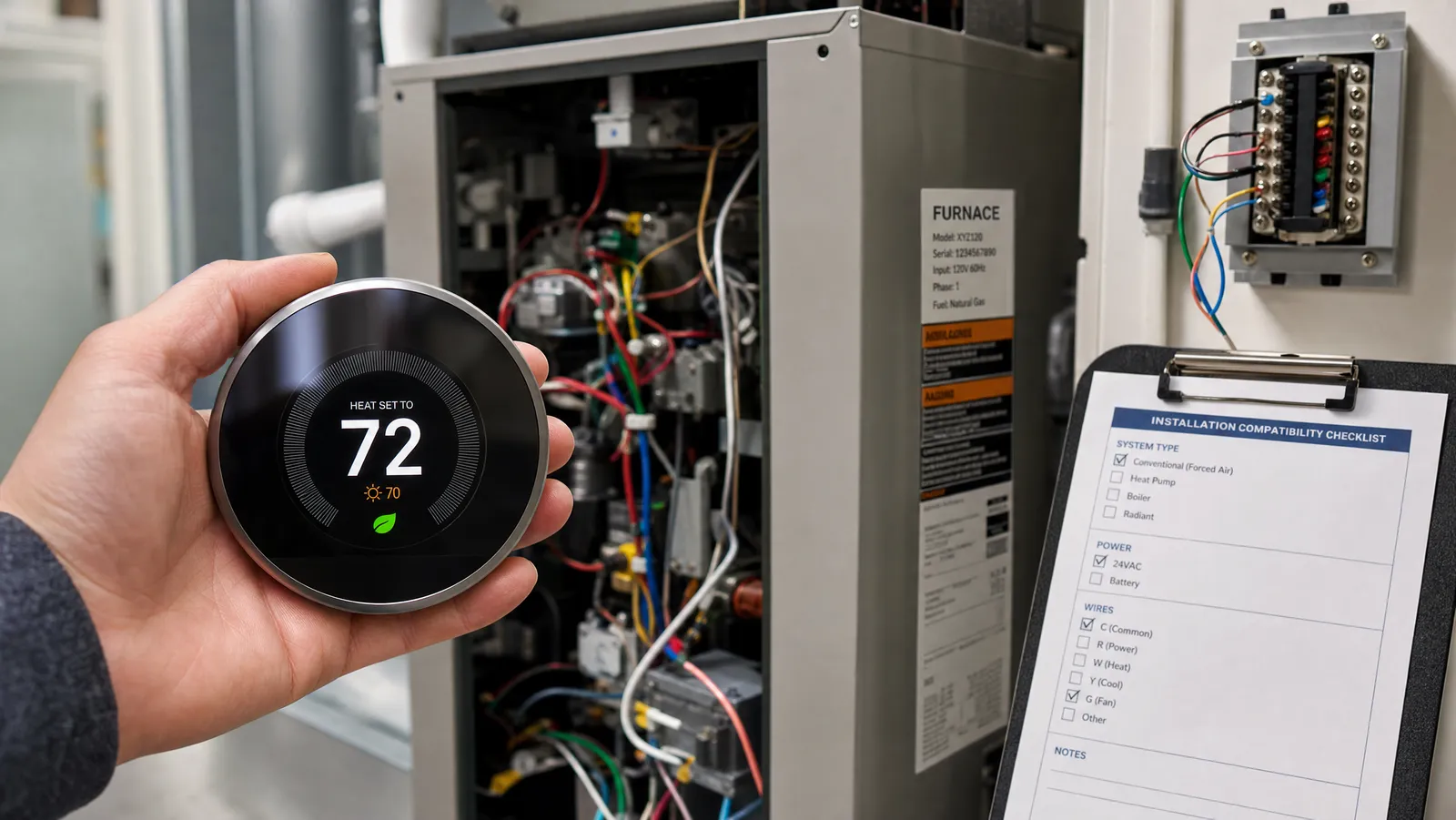
Before you fall for a particular smart thermostat, there's one question to settle: will it actually work with your heating and cooling system? Most standard homes are fine, but heat pumps, mini-splits, and electric baseboard heat each have their own rules — and buying the wrong model is the most common reason for a frustrating return. This guide helps you check in a few minutes. For the picks themselves, see our complete smart thermostat buyer's guide.
The quick compatibility check
- Turn off power at the breaker and pull your old thermostat off the wall.
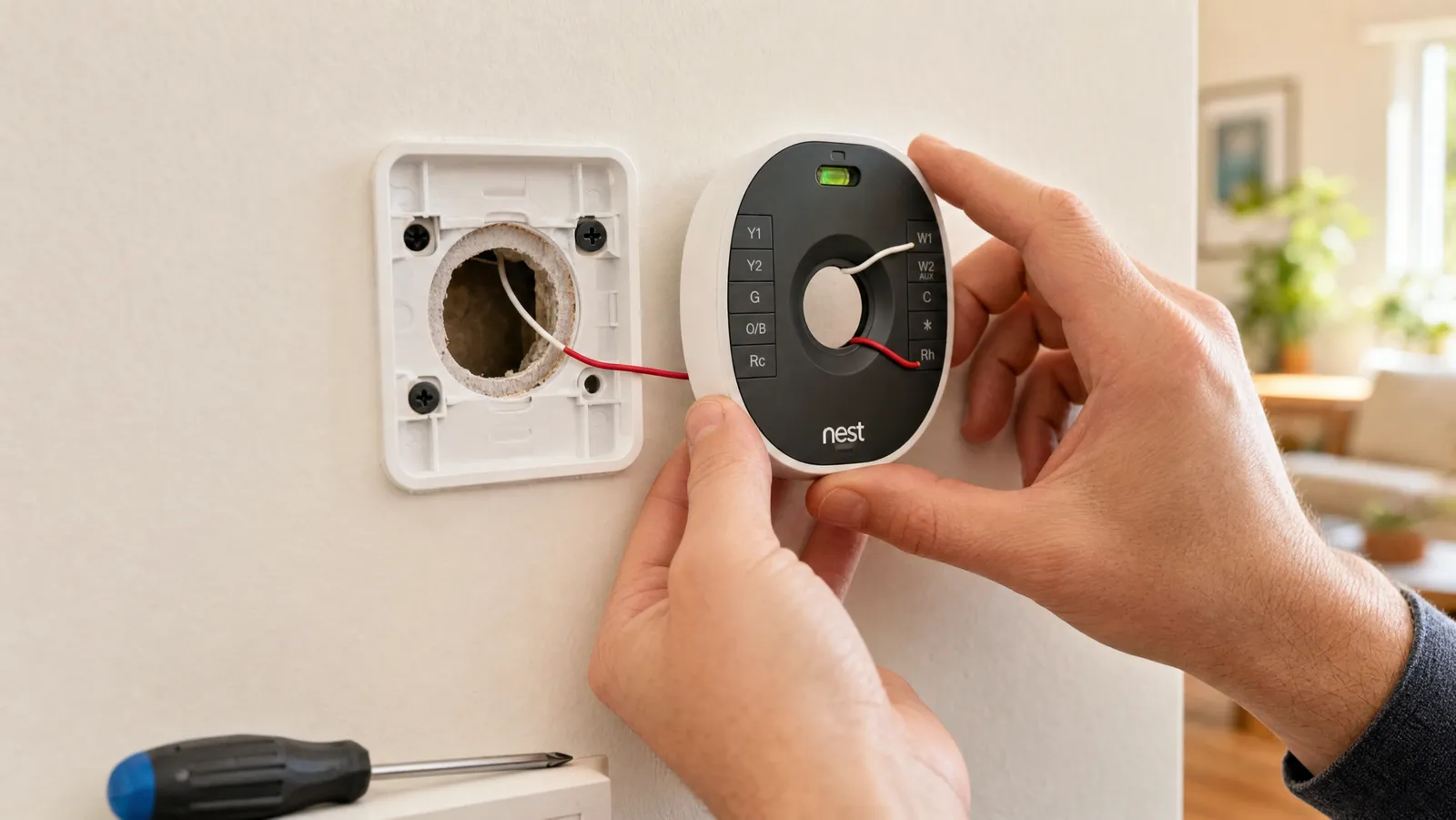
- Count and note the wires and which terminals they use (R, C, W, Y, G, and any extras like W2, Y2, O/B). Photograph it.
- Look for a C-wire in the C terminal — and check for a spare, unused wire (see C-wire explained).
- Identify your system type (below).
- Run the manufacturer's online compatibility checker — Google, ecobee, and Honeywell all offer one where you enter your wires.
Five minutes here saves a return later.
Most common: standard forced-air systems
If you have a conventional gas, oil, or electric forced-air furnace with central AC, you're in the easy majority — virtually every smart thermostat works, including all of our top picks. Your only real variable is the C-wire. This covers most single-family homes.
Heat pumps
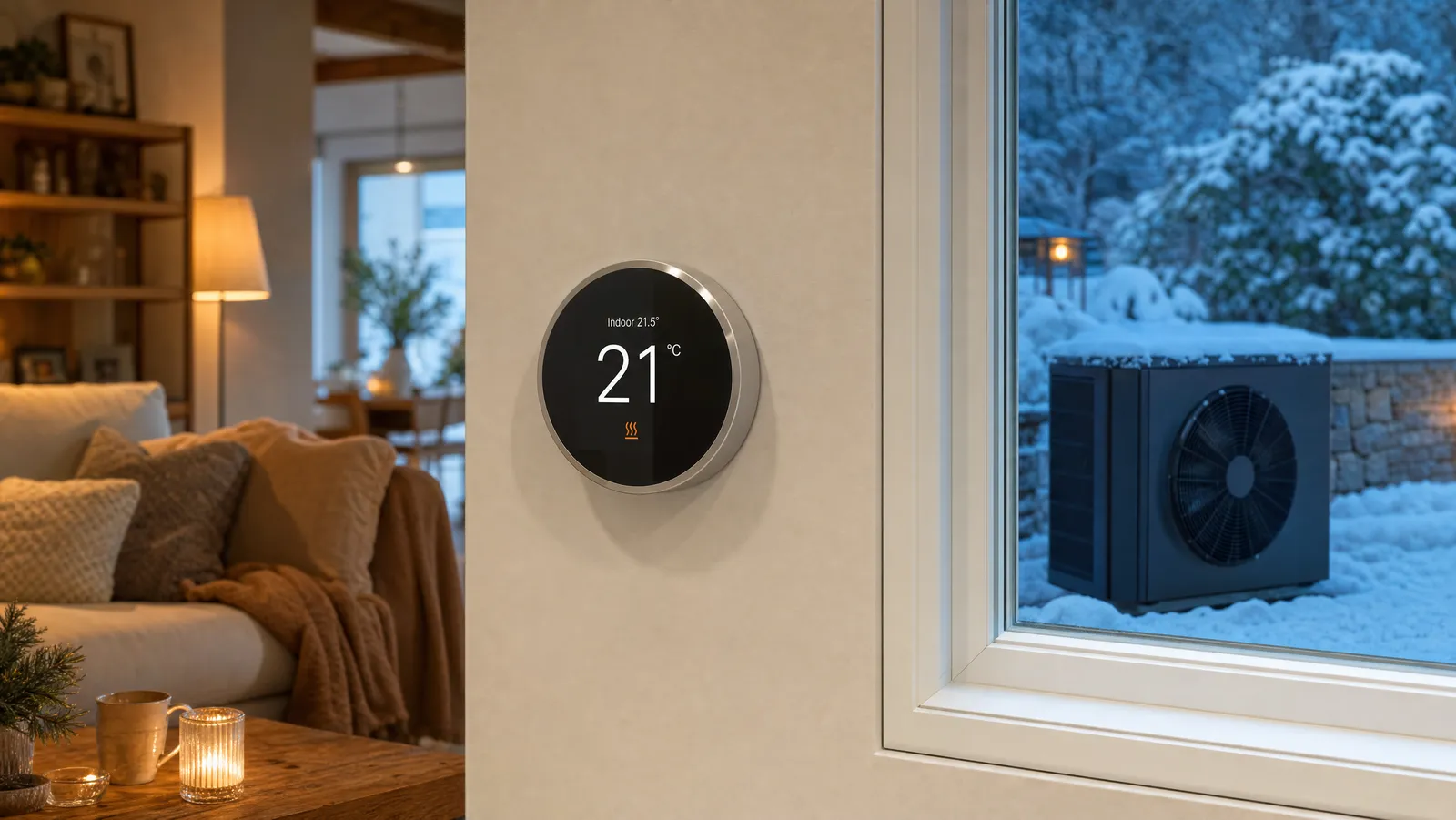
Heat pumps need a thermostat that understands auxiliary and emergency heat and the reversing valve (O/B wire). Not every model handles this well, so choose from a heat-pump-capable list. We cover the best options and how to set up auxiliary-heat lockout in best smart thermostats for heat pumps. The ecobee and Honeywell X7S (up to 3 heat / 2 cool with backup) are reliable choices.
Mini-splits and ductless systems
Ductless mini-splits usually can't use a standard wall thermostat at all — they're controlled by their own remote or a special IR/bridge controller. A typical Nest or ecobee won't work directly. See our dedicated guide to smart thermostats for mini-splits and ductless systems for the right approach.
Electric baseboard and line-voltage heat
Baseboard and other line-voltage (120–240V) systems need a thermostat built specifically for high voltage — most smart thermostats (including the Honeywell X7S) are low-voltage only and won't work. Mysa is the best-known smart option made for line-voltage baseboard heat.
Multi-stage and zoned systems
Multi-stage systems (W2/Y2) and whole-home zoning add wires and complexity. Most premium thermostats (ecobee, Nest Learning, Honeywell X7S) support multiple stages, but each zone generally needs its own thermostat. For balancing rooms within a zone, remote sensors help — see room sensors and multi-zone.
Compatibility cheat sheet
| Your system | Will a standard smart thermostat work? | Notes | |-------------|----------------------------------------|-------| | Forced-air gas/oil/electric + AC | ✅ Yes | Check C-wire | | Heat pump (with aux heat) | ✅ Yes, if heat-pump-rated | See heat pump guide | | Mini-split / ductless | ⚠️ Special controller needed | See mini-split guide | | Electric baseboard (line-voltage) | ❌ Needs a line-voltage model | e.g., Mysa | | Multi-stage / zoned | ✅ Premium models | One thermostat per zone |
Frequently asked questions
How do I know if a smart thermostat is compatible? Note your thermostat wires, identify your system type, and run the manufacturer's online compatibility checker. Standard forced-air systems almost always work.
Will a smart thermostat work with a heat pump? Yes, if it's heat-pump-rated with auxiliary/emergency heat support. See our heat pump guide.
Do smart thermostats work with mini-splits? Not the standard wall models — ductless systems need their own controller. See smart thermostats for mini-splits.
What about electric baseboard heat? That's line-voltage and needs a thermostat made for it (like Mysa); most smart thermostats are low-voltage only.
The bottom line
Most homes with standard forced-air heating and cooling can use almost any smart thermostat — just mind the C-wire. Heat pumps, mini-splits, and baseboard heat each need the right type of thermostat, so identify your system first and run a compatibility checker. Then head to our complete smart thermostat buyer's guide to choose with confidence.
About the Author
Ilana Nevin
Ilana Nevin is a content creator and marketing professional who is passionate about new technology, home automation and the smart home revolution. She has been blogging about these topics for over five years and is excited to see how the industry continues to evolve.